
Heat Pumps | Repair, Maintenance & Installation
Learn how heat pumps heat and cool your home, common repair signs, maintenance needs, and replacement options. Call ACS today.

Heat Pumps: Heating and Cooling From One System
Heat pumps are versatile HVAC systems that provide both heating and air conditioning in one piece of equipment. Instead of producing heat through combustion like a gas furnace, a heat pump transfers heat from one location to another. In summer, it moves heat out of your home. In winter, it pulls available heat from outdoor air and transfers it indoors.
For many homes and businesses in Gainesville and Northeast Georgia, a heat pump can be an effective year-round comfort solution because the region experiences a mix of warm, humid summers and generally moderate winter conditions. The system’s ability to cool, heat, manage indoor comfort, and operate from electricity makes it a practical option for many properties.
Air Conditioning Services (ACS) provides heat pump repair, maintenance, installation, and replacement services for residential and commercial customers. Our highly trained HVAC contractors work on all brands, makes, and models and take time to explain what is happening with your equipment, what solutions are available, and which options make sense for your needs. ACS is licensed, insured, and bonded, and our products and services are backed by a 100% guarantee.
Whether you are considering a new heat pump, need help with an existing system, or want to understand how a heat pump compares with a furnace, this guide covers the essential information homeowners and business owners should know.
What Is a Heat Pump?
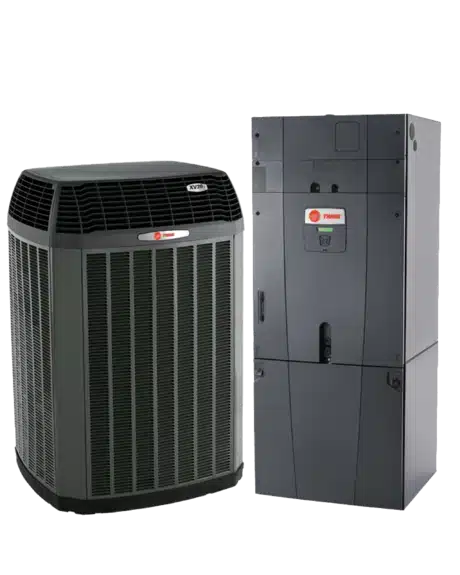
A heat pump is an electrically powered HVAC system that transfers heat rather than generating it through fuel combustion. It uses refrigerant, coils, a compressor, fans, and a reversing valve to move heat in the direction your property needs.
During cooling season, a heat pump functions much like a central air conditioner. It absorbs heat from indoor air, carries that heat outside through refrigerant, and releases it outdoors. The indoor system circulates cooler air through your ductwork while also removing some moisture from the air.
During heating season, the process reverses. The heat pump collects thermal energy from outdoor air and brings it indoors. Even when the air outside feels cold, it still contains heat energy that the system can move. As outdoor temperatures fall, however, the system may have less available heat to capture and may need supplemental heating support.
Most ducted heat pump systems include:
- Outdoor unit: Contains the compressor, outdoor coil, fan, and other key components needed to exchange heat with outdoor air.
- Indoor air handler or coil: Supports heat transfer inside the home and works with the blower to circulate conditioned air.
- Refrigerant: Transfers heat between the indoor and outdoor units.
- Compressor: Pressurizes refrigerant and keeps it moving through the system.
- Reversing valve: Changes the direction of refrigerant flow so the system can switch between heating and cooling.
- Thermostat: Signals the heat pump when to heat, cool, or turn off.
- Ductwork and vents: Deliver conditioned air to rooms and return indoor air to the HVAC system.
- Auxiliary or backup heat: Provides added heating support when outdoor conditions are especially cold or the system needs additional capacity.
Because heat pumps are complex systems with electrical components, refrigerant, moving parts, and controls that operate in more than one mode, professional installation, maintenance, and repair are important for dependable performance.
How Heat Pumps Work in Summer and Winter
Understanding the basic heat-pump cycle can make it easier to recognize why the system behaves differently throughout the year.
Heat Pump Cooling Mode
In cooling mode, the indoor coil acts as the evaporator coil. Refrigerant absorbs heat from the indoor air as air moves across the coil. The system also removes moisture from the air, which helps improve comfort during humid Northeast Georgia summers.
The refrigerant carries the absorbed heat to the outdoor unit. There, the outdoor coil releases the heat outside. The cooled indoor air is then circulated through the ducts and vents.
This process is similar to central air conditioning. If your heat pump is not cooling effectively, the issue may involve refrigerant, airflow, electrical components, the compressor, the thermostat, the indoor coil, the outdoor coil, or another part of the cooling cycle.
Heat Pump Heating Mode
In heating mode, the reversing valve changes the refrigerant flow. The outdoor coil absorbs heat from the outside air, and the refrigerant carries that heat indoors. The indoor coil then releases heat into the air moving through the system, and the blower distributes warm air through your home or business.
A heat pump’s supply air may feel less hot than the air produced by a gas furnace. That does not always indicate a problem. Heat pumps often provide steady, moderate warmth over longer run cycles, while furnaces may deliver hotter air in shorter heating cycles.
During cold or damp conditions, frost can form on the outdoor coil. A properly operating heat pump periodically enters a defrost cycle to melt frost and protect performance. Temporary steam from the outdoor unit during defrost can be normal. However, heavy ice buildup, repeated defrosting, poor heating performance, or an outdoor unit that remains frozen may indicate a problem that should be professionally inspected.
Benefits of Heat Pumps
A heat pump can offer meaningful comfort and operational advantages when selected and installed for the property’s needs.
- Heating and cooling in one system: A single heat pump can provide year-round temperature control, reducing the need for separate heating and cooling equipment.
- Electric operation: Heat pumps do not burn fuel to produce heat, making them a useful option for homes without natural gas access or for property owners who prefer an all-electric HVAC approach.
- Efficient operation in moderate weather: Because a heat pump transfers heat rather than relying only on electric resistance heating, it can be an efficient option during milder winter temperatures.
- Humidity control in cooling mode: During air conditioning operation, the indoor coil removes heat and some moisture from indoor air, helping create more comfortable conditions during humid weather.
- Compatibility with ducted systems: Many heat pumps work with existing central ductwork, making them suitable for homes and businesses already designed for forced-air heating and cooling.
- Flexible system designs: Heat pumps can be paired with electric auxiliary heat or combined with a gas furnace in a dual-fuel system.
The best HVAC option depends on the property, not just the equipment category. Building size, insulation, ductwork, electrical capacity, fuel availability, comfort expectations, budget, and local weather conditions all affect whether a heat pump is the right choice.
Heat Pumps and Auxiliary Heat
Many heat pumps use auxiliary heat, often shown as “AUX HEAT” on compatible thermostats, to provide supplemental warmth when needed. Auxiliary heat may turn on when outdoor temperatures are low, when the system is recovering after a large thermostat adjustment, during a defrost cycle, or when the heat pump cannot meet the heating demand on its own.
In many systems, auxiliary heat comes from electric heat strips located in the air handler. These strips can provide additional heating capacity, but they may use more electricity than the heat pump’s normal heating mode. It is generally helpful to avoid making large, sudden thermostat increases during cold weather because doing so may cause auxiliary heat to operate longer than necessary.
“Emergency heat” is different from auxiliary heat. Emergency heat is typically a manual thermostat setting that may turn off the outdoor heat-pump unit and rely on backup electric heat alone. It is usually intended for situations where the heat pump itself has a problem and a technician has advised using backup heat temporarily. If you are unsure whether to use emergency heat, contact an HVAC professional.
Common Heat Pump Problems
Heat pumps can develop problems in either heating or cooling mode. Because a heat pump performs two seasonal jobs, a concern that appears minor at first may affect year-round comfort if it is not addressed.
Heat Pump Is Not Heating
If the heat pump is running but your home still feels cold, check that the thermostat is set to “heat” and that the set temperature is above the room temperature. Also make sure the air filter is not heavily clogged and that supply and return vents are open.
If the problem persists, possible causes may include a thermostat issue, airflow restriction, refrigerant concern, defrost malfunction, electrical problem, reversing valve issue, compressor trouble, or a problem with auxiliary heating components. A trained technician can inspect the system and determine why it is not providing enough heat.
Heat Pump Is Not Cooling
Poor cooling may be caused by dirty coils, restricted airflow, refrigerant loss, electrical component failure, thermostat problems, compressor issues, duct leaks, or other mechanical concerns. If the system is blowing warm air, runs continuously, fails to reach the thermostat setting, or creates unusually high utility costs, schedule professional heat pump repair.
Outdoor Unit Is Frozen
A light layer of frost may occur during winter operation and should be cleared during normal defrost operation. Heavy ice, persistent frost, or an outdoor coil that remains frozen can restrict airflow and heat transfer. This may be related to defrost controls, sensors, refrigerant levels, outdoor airflow, electrical components, or other issues.
Do not chip ice off the unit with sharp tools, pour hot water on the equipment, or force the system to operate while it is heavily iced. Turn the system off if advised by your HVAC provider and schedule service.
Short Cycling
Short cycling means the system turns on and off frequently. This can place extra wear on components and prevent the system from maintaining stable indoor comfort. Dirty filters, thermostat placement or settings, airflow restrictions, electrical problems, refrigerant issues, equipment sizing concerns, or failing components can all contribute to short cycling.
Weak Airflow
Weak airflow can leave rooms uncomfortable even when the heat pump is operating. A dirty filter, blocked vent, blower problem, duct restriction, dirty coil, or improperly balanced duct system may be involved. Replacing the filter and ensuring vents are unobstructed are useful first steps, but ongoing airflow problems should be evaluated by an HVAC technician.
Unusual Noises
Heat pumps make normal operating sounds, including fan noise and occasional reversing-valve sounds when switching modes. However, grinding, squealing, loud buzzing, persistent clicking, rattling, or banging may indicate loose parts, motor trouble, electrical issues, compressor problems, or another mechanical concern.
Call for service promptly if a new or worsening noise is accompanied by poor heating, poor cooling, a burning odor, breaker trips, or system shutdowns.
Heat Pump Maintenance
Seasonal maintenance helps prepare your heat pump for both heating and cooling demand. Since the same equipment operates year-round, professional inspections can help identify issues before they affect comfort in the middle of winter or during the hottest part of summer.
A heat pump maintenance visit may involve inspection and testing of applicable components, including:
- Thermostat operation, settings, and controls.
- Air filter condition and overall airflow.
- Indoor and outdoor coils.
- Refrigerant-related components and system performance.
- Electrical connections, capacitors, relays, and contactors.
- Blower motor and outdoor fan operation.
- Condensate drainage.
- Defrost controls and defrost-cycle operation.
- Refrigerant line insulation and visible system condition.
- Ductwork-related comfort or airflow concerns.
The exact tune-up process depends on the system, manufacturer recommendations, and technician findings. Regular maintenance cannot guarantee that equipment will never fail, but it can help uncover developing issues, protect performance, and give you a clearer understanding of your heat pump’s condition.
Between professional service appointments, homeowners can replace filters as needed, keep the outdoor unit clear of leaves and debris, avoid blocking supply or return vents, and pay attention to changes in comfort, noises, cycling, drainage, and utility costs.
Heat Pump Repair or Replacement
Many heat pump problems can be repaired, particularly when the unit is newer and the issue is isolated. A technician may be able to correct electrical component failures, airflow restrictions, thermostat concerns, drainage issues, defrost problems, or other repairable conditions.
Replacement may be worth discussing when the system needs frequent repairs, no longer cools or heats dependably, has a major component failure, is nearing the end of its useful service life, or no longer fits the needs of the property. A replacement may also make sense if you are renovating, expanding the building, updating an outdated HVAC design, or seeking a different system configuration.
Proper sizing is essential. A heat pump that is too large or too small can create problems with comfort, humidity control, efficiency, equipment cycling, and longevity. Before recommending a system, an HVAC contractor should evaluate the building’s size, layout, insulation, windows, ductwork, occupancy, and comfort priorities.
ACS provides heating and air system installation and helps customers review system sizes and types that are effective and affordable for their homes or offices. The team emphasizes clear recommendations so customers can make informed decisions without pressure.
Heat Pump Service in Gainesville and Northeast Georgia
When your heat pump stops heating, struggles to cool, freezes up, makes unusual sounds, or needs seasonal maintenance, professional service can help protect your comfort and identify the root cause.
Air Conditioning Services provides residential and commercial HVAC service throughout Gainesville and Northeast Georgia. ACS has generations of experience installing, maintaining, and repairing heating and air systems of all brands. The company offers flexible scheduling, employs highly trained and background-checked HVAC contractors, and backs its products and services with a 100% guarantee.
ACS serves customers across Hall, Habersham, Gwinnett, Jackson, Stephens, Dawson, Lumpkin, and Forsyth counties, including Gainesville, Flowery Branch, Oakwood, Clermont, Lula, Buford, Braselton, Dawsonville, Dahlonega, and Cumming.
For dependable heat pump repair, maintenance, installation, or replacement guidance, call Air Conditioning Services at 770-532-0731.
Professional Furnace Service in Northeast Georgia
A furnace is a complex system with electrical controls, moving parts, high temperatures, and—in gas systems—fuel and combustion components. Professional service helps ensure the issue is diagnosed correctly and that repairs, maintenance, or installation work is completed with attention to safety and system performance.
Air Conditioning Services offers residential and commercial HVAC support across Northeast Georgia, including Gainesville, Flowery Branch, Oakwood, Clermont, Lula, Buford, Braselton, Dawsonville, Dahlonega, Cumming, and surrounding communities. ACS technicians are highly trained, background-checked, and experienced in installing, maintaining, and repairing heating and air systems of all brands.
If your furnace is making unusual noises, not heating consistently, blowing cool air, or due for seasonal maintenance, call Air Conditioning Services at 770-532-0731. ACS can assess your heating system, explain your options clearly, and help restore the dependable comfort your home or business needs.
Open 7AM - 5PM Monday-Friday
Quick Contact Form
Make a Payment

Our Service Area
We have happy customers all around the Northeast Georgia area. We’ve provided HVAC services for homes and businesses in:
· Hall County: Clermont, Flowery Branch, Gainesville, Lula, & Oakwood
· Habersham County: Alto, Baldwin, Clarkesville, Cornelia, Demorest, Mount Airy & Tallulah Falls
· Gwinnett County: Dacula, Sugar Hill, Buford, Lawrenceville
· Jackson County: Pendergrass, Arcade, Braselton, Commerce, Hoschton, Jefferson, Maysville, Nicholson & Talmo
· Stephens County: Martin & Toccoa
· Dawson County: Dawsonville
· Lumpkin County: Dahlonega
· Forsyth County: Cumming
Contact us today when you need HVAC services you can trust.