


Dual Fuel | Efficient Heating With Heat Pump + Gas Furnace
Discover how dual fuel systems combine an electric heat pump with a gas furnace, when they make sense, and what to expect for comfort, controls, and installation. Call ACS today.

Dual Fuel: Smart Heating That Switches Automatically
Dual fuel systems pair two proven technologies—an air-source heat pump and a high-efficiency gas furnace—so your home benefits from the strengths of each. In milder weather, the heat pump delivers efficient electric heating and cooling by transferring heat. When outdoor temperatures drop past a set switchover point, the system automatically calls on the gas furnace for stronger, warmer output.
For many homes and businesses in Gainesville and Northeast Georgia, dual fuel offers a cost-effective path to year-round comfort. Our region’s humid summers favor the heat pump’s cooling performance, while occasional cold snaps make the gas furnace a dependable heat source that maintains comfort without relying on costly electric resistance heat.
Air Conditioning Services (ACS) designs, installs, and services dual fuel systems for residential and commercial properties. Our licensed, insured, and bonded technicians are trained on all major brands and controls. We explain the balance point, utility-rate impacts, and equipment options so you understand how your system will operate in real conditions. Every installation and service is backed by our 100% guarantee.
Whether you’re upgrading from a traditional furnace, comparing heat pump vs. furnace approaches, or planning a retrofit, this guide outlines how dual fuel works, when it excels, and what to consider before you invest.
What Is a Dual Fuel System?
A dual fuel system is a hybrid heating setup that combines an electric heat pump with a gas furnace. The heat pump handles cooling all summer and provides efficient heating in mild winter weather. When outdoor temperatures reach a predetermined switchover temperature—also called the balance point—the system switches to the gas furnace for higher-temperature heat and reliable capacity.
In cooling season, the heat pump functions like a central air conditioner, absorbing indoor heat and releasing it outdoors. In heating season, it reverses to bring available heat inside. When conditions fall below the efficient operating range of the heat pump, the control board or thermostat automatically selects the furnace to maintain comfort at lower cost and with faster recovery.
Typical dual fuel systems include these components:
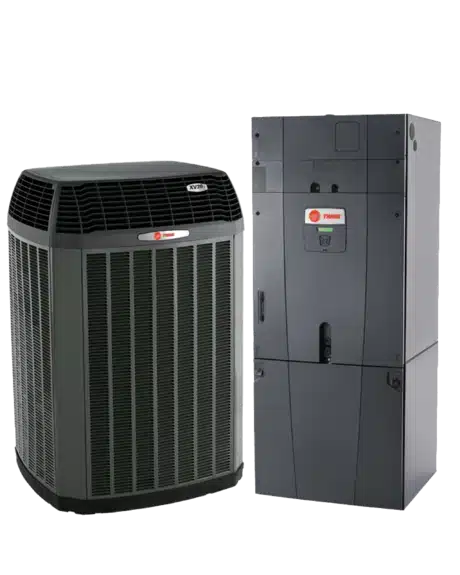
- Outdoor heat pump unit: Includes the compressor, outdoor coil, and fan to exchange heat with outdoor air for cooling and mild-weather heating.
- Indoor furnace with coil: A gas furnace provides high-temperature heat; an indoor coil supports the heat pump’s heating and cooling operation.
- Refrigerant circuit: Connects indoor and outdoor coils so the heat pump can move heat in either direction.
- Compressor: Pressurizes refrigerant and drives the heat transfer process during heat pump operation.
- Reversing valve: Switches the heat pump between cooling and heating modes.
- Dual fuel thermostat or controls: Manage staging and switchover based on temperature, demand, and user settings.
- Ductwork and vents: Distribute conditioned air from either the heat pump or the furnace throughout the home.
- Auxiliary heating logic: Coordinates when the system transitions from heat pump to furnace rather than relying on electric heat strips.
Because dual fuel systems integrate refrigeration, gas combustion, and advanced controls, professional design, installation, and commissioning are essential for safe, efficient performance.
How Dual Fuel Switches for Comfort and Savings
Understanding switchover logic helps you know why the system chooses the heat pump on some days and the gas furnace on others.
Cooling and Mild-Weather Heating
In cooling mode, the heat pump’s indoor coil acts as the evaporator, removing heat and humidity from indoor air—ideal for humid Northeast Georgia summers. In shoulder seasons, the heat pump provides efficient, steady heating, often at a lower operating cost than running a furnace when outdoor temperatures are moderate.
The system’s controls monitor indoor demand and outdoor temperature. When conditions favor the heat pump, it runs alone for quiet, even comfort and moisture control. Variable-speed or two-stage equipment can fine-tune output to maintain a consistent indoor temperature.
If cooling or mild-heat performance is lacking, possible causes include refrigerant charge, airflow restrictions, control settings, sensor issues, or coil cleanliness. Proper diagnostics should evaluate both airflow and refrigeration before adjusting switchover points.
Cold-Weather Switchover
As outdoor temperatures fall, the heat pump’s capacity and efficiency decline. A dual fuel thermostat or integrated control uses a programmed switchover temperature—often near the balance point where heat pump efficiency equals furnace operating cost—to engage the gas furnace.
Furnace heat feels hotter at the register and recovers faster after setbacks. During damp cold, the heat pump may enter a defrost cycle to clear frost from the outdoor coil; in a dual fuel setup, the furnace can maintain indoor comfort while the heat pump defrosts, minimizing temperature dips and avoiding electric resistance heat.
Properly configured, dual fuel delivers seamless transitions. If you notice frequent short cycling, poor heat at low temps, or excessive defrosting, have an HVAC professional review the thermostat configuration, outdoor sensor accuracy, and staging parameters.
Benefits of Dual Fuel
When matched to the climate and utility rates, dual fuel can optimize comfort and operating costs across the seasons.
- Right heat at the right time: Heat pump efficiency in mild weather and furnace strength in cold snaps provide balanced performance all year.
- Lower operating costs: Switchover logic leverages electricity when it’s cost-effective and natural gas when it’s cheaper or more efficient at low temperatures.
- Improved comfort and humidity control: The heat pump manages summer cooling and dehumidification, while the furnace delivers warmer supply air in freezing weather.
- Reduced reliance on electric strips: Unlike all-electric setups, dual fuel avoids extended electric resistance heat use, which can increase utility bills.
- Compatible with existing ducts: Many homes can be retrofitted by adding a heat pump outdoor unit and indoor coil to an existing gas furnace.
- Flexible, smart controls: Modern dual fuel thermostats allow custom switchover temperatures, time-in-stage rules, and integration with variable-speed equipment.
The best choice depends on your home’s size, insulation, duct condition, gas availability, electrical capacity, comfort goals, budget, and local utility rates. ACS can model expected performance using HSPF and AFUE ratings and your historical usage.
Dual Fuel Controls and Settings
A dual fuel system uses a switchover temperature—often near the home’s balance point—to determine when to change from heat pump to furnace. Smart thermostats can also consider runtime, outdoor sensors, and utility rate schedules to refine decisions.
Because furnace heat is more powerful, large thermostat setbacks are usually unnecessary and can trigger extra fuel use. Many homeowners prefer small setpoint changes and schedule-based adjustments for comfort and efficiency. If you’re unsure how to configure your thermostat’s dual fuel or “lockout” settings, ask an HVAC professional to optimize them for your home.
Emergency heat on dual fuel systems is typically unnecessary except during equipment faults. If you suspect a problem, contact a technician before changing advanced settings.
Common Dual Fuel Concerns
Dual fuel systems pair an electric heat pump with a gas furnace and automatically switch between them for optimal comfort and cost. When either side of the system isn’t coordinated correctly, performance suffers. Addressing small issues early helps preserve efficiency across all seasons.
System Isn’t Switching to the Right Heat Source
If your home feels chilly during a cold snap, verify the thermostat is in “heat” mode and that dual fuel or hybrid controls are enabled. Check that the set temperature is above the current room temperature and that the filter and vents are clear.
When problems persist, common causes include incorrect switchover temperature settings, thermostat or outdoor sensor faults, communication issues between the heat pump and furnace, airflow restrictions, or a furnace ignition or gas-supply problem. An ACS technician can evaluate balance-point settings, controls, and equipment to restore proper changeover.
Heat Pump Runs When Gas Heat Would Be Cheaper
If the heat pump operates during very low outdoor temperatures, you may be exceeding its efficient range. Incorrect outdoor temperature sensing, misconfigured thermostat logic, or utility rate changes can all lead to higher bills. Professional calibration can set an appropriate switchover temperature and account for your current gas and electric rates.
Outdoor Unit Icing and Defrost Coordination
Light frost on the heat pump in winter is normal and should clear during defrost. Persistent ice can reduce airflow and prevent timely handoff to the furnace. Causes include defrost control issues, failing sensors, low refrigerant, outdoor airflow blockages, or control-board communication faults in dual fuel mode.
Avoid chipping ice or using hot water. If advised by your HVAC professional, switch the system off and schedule service so ACS can correct the fault and recalibrate defrost and switchover logic.
Short Cycling Between Heat Sources
Frequent starts and stops—especially rapid toggling between the heat pump and furnace—waste energy and stress components. Contributing factors include improper thermostat staging, a poorly chosen balance point, oversized equipment, airflow restrictions, or sensor and control malfunctions.
Uneven Airflow or Comfort
If rooms feel unevenly heated, the cause may be a dirty filter, blocked registers, blower or inducer issues, duct restrictions, dirty coils, or an unbalanced duct system. In dual fuel setups, mismatched blower settings between the furnace and air handler can also contribute to inconsistent comfort. An ACS technician can align fan speeds and address duct or equipment issues.
Unusual Noises From Either Side
Normal operation includes fan and occasional defrost sounds. Grinding, squealing, loud buzzing, persistent clicking, rattling, or banging may indicate furnace combustion or blower issues, motor or compressor problems at the heat pump, or loose components. Prompt service is recommended, particularly if paired with uneven heating, odors, breaker trips, or shutdowns.
Dual Fuel Maintenance
Because dual fuel systems combine a heat pump and a gas furnace, seasonal maintenance ensures both heat sources and the controls that coordinate them are operating correctly. Proactive care helps the system switch at the right time, maximize efficiency, and avoid comfort issues when the weather swings.
A dual fuel maintenance visit may involve inspection and testing of applicable components, including:
- Thermostat operation, dual fuel settings, outdoor sensors, and staging/lockout controls.
- Air filter condition and overall airflow.
- Indoor and outdoor coils.
- Refrigerant-related components and system performance.
- Electrical connections, capacitors, relays, and contactors.
- Blower motor and outdoor fan operation.
- Condensate drainage.
- Defrost controls and defrost-cycle operation.
- Refrigerant line insulation and visible system condition.
- Ductwork-related comfort or airflow concerns.
Technicians will also evaluate furnace-specific items such as ignition and safety controls, heat exchanger condition, gas pressure, venting, and proper handoff between the furnace and heat pump. While maintenance can’t eliminate every breakdown, it helps confirm accurate switchover temperatures, protects efficiency, and provides a clear snapshot of your system’s health.
Between visits, replace filters as needed, keep the outdoor unit free of debris, ensure supply and return vents remain open, and watch for changes in comfort, cycling, noises, energy usage, and whether the system is switching sources appropriately for outdoor conditions.
Repair or Replace a Dual Fuel System
Many issues in a dual fuel setup can be corrected, including faulty sensors, thermostat configuration errors, refrigerant or airflow problems, furnace ignition concerns, and control-board communication faults. Calibrating the balance point and optimizing staging often delivers immediate improvements in comfort and operating cost.
Consider replacement when the system needs frequent repairs, has major component failures on either the heat pump or furnace, struggles to meet heating or cooling demand, or is approaching the end of its service life. Upgrading can add variable-speed or two-stage equipment, smarter control algorithms, and better cold-weather performance to reduce utility costs.
Proper sizing and matching are critical. The heat pump capacity, furnace output, blower performance, and ductwork must work together for smooth switchover, humidity control, and quiet operation. Before recommending options, an HVAC contractor should assess the home’s size, envelope, windows, duct system, occupancy, and comfort priorities, as well as local utility rates to set an effective switchover temperature.
ACS provides heating and air system installation and helps customers compare dual fuel configurations that are effective and affordable for their homes or offices. The team emphasizes clear recommendations so customers can make informed decisions without pressure.
Dual Fuel Expertise in Gainesville and Northeast Georgia
If your hybrid system isn’t switching heat sources correctly, struggles in extreme weather, ices over, makes unusual sounds, or is due for seasonal maintenance, professional service can restore dependable, efficient comfort.
Air Conditioning Services provides residential and commercial HVAC service throughout Gainesville and Northeast Georgia. ACS has generations of experience installing, maintaining, and repairing heating and air systems of all brands. The company offers flexible scheduling, employs highly trained and background-checked HVAC contractors, and backs its products and services with a 100% guarantee.
ACS serves customers across Hall, Habersham, Gwinnett, Jackson, Stephens, Dawson, Lumpkin, and Forsyth counties, including Gainesville, Flowery Branch, Oakwood, Clermont, Lula, Buford, Braselton, Dawsonville, Dahlonega, and Cumming.
For dependable dual fuel guidance—maintenance, optimization, installation, or replacement—call Air Conditioning Services at 770-532-0731.
Professional Dual Fuel Service in Northeast Georgia
A dual fuel system integrates electric and gas heating with advanced controls. Professional service ensures accurate diagnostics, safe furnace operation, correct heat pump performance, and precise switchover logic so your home stays comfortable at the lowest practical operating cost.
Air Conditioning Services offers residential and commercial HVAC support across Northeast Georgia, including Gainesville, Flowery Branch, Oakwood, Clermont, Lula, Buford, Braselton, Dawsonville, Dahlonega, Cumming, and surrounding communities. ACS technicians are highly trained, background-checked, and experienced in installing, maintaining, and repairing heating and air systems of all brands.
If your dual fuel system is short cycling, not changing over at the right temperature, producing uneven comfort, or due for maintenance, call Air Conditioning Services at 770-532-0731. ACS will assess your equipment and controls, explain your options clearly, and help optimize performance for your home or business.
Open 7AM - 5PM Monday-Friday
Quick Contact Form
Make a Payment

Our Service Area
We have happy customers all around the Northeast Georgia area. We’ve provided HVAC services for homes and businesses in:
· Hall County: Clermont, Flowery Branch, Gainesville, Lula, & Oakwood
· Habersham County: Alto, Baldwin, Clarkesville, Cornelia, Demorest, Mount Airy & Tallulah Falls
· Gwinnett County: Dacula, Sugar Hill, Buford, Lawrenceville
· Jackson County: Pendergrass, Arcade, Braselton, Commerce, Hoschton, Jefferson, Maysville, Nicholson & Talmo
· Stephens County: Martin & Toccoa
· Dawson County: Dawsonville
· Lumpkin County: Dahlonega
· Forsyth County: Cumming
Contact us today when you need HVAC services you can trust.