


Heat Pump vs Furnace | Comfort, Costs & Efficiency
Compare how heat pumps and furnaces heat your home, what drives comfort and energy bills, and which system fits your climate and budget. Explore the trade-offs below, then call ACS for expert guidance.

One System or Two: Choosing Between Heat Pump and Furnace
Heat pumps and furnaces deliver warmth in very different ways. Furnaces create heat, typically by burning natural gas or using electric resistance, and push hot air through your ducts. A heat pump doesn’t generate heat—it moves it. Using a refrigeration cycle and a reversing valve, a heat pump extracts heat from outdoor air and transfers it indoors; in summer, that cycle flips to provide air conditioning.
In Gainesville and across Northeast Georgia, winters are usually moderate, which lets heat pumps operate efficiently for much of the season while doubling as your central AC in summer. In contrast, a gas furnace can deliver hotter supply air and robust performance on the coldest mornings, but you’ll still need a separate air conditioner for cooling.
Air Conditioning Services (ACS) helps homeowners and businesses weigh these differences with clear data on efficiency, comfort, and costs. Our licensed, insured, and bonded team works with all major brands and system types, explains your options in plain language, and backs recommendations with a 100% guarantee.
Whether you’re replacing aging equipment or building new, this guide breaks down the real-world pros and cons of a heat pump vs a furnace so you can choose with confidence.
How Each System Heats: Components and Operation
A furnace produces heat and a heat pump moves heat—understanding that distinction is key to predicting efficiency and comfort.
Gas furnaces rely on a burner, heat exchanger, and blower. Combusted gas heats the exchanger; air passing over it picks up heat and is distributed through your ducts. Electric furnaces use heating elements instead of combustion but operate similarly from the homeowner’s perspective: very warm supply air and short, powerful cycles.
Heat pumps use refrigerant, indoor and outdoor coils, a compressor, and a reversing valve. In heating mode, the outdoor coil absorbs heat from outside air and the indoor coil releases that heat into your home. Even cold air contains usable heat; the system concentrates it and moves it indoors. As temperatures drop closer to the system’s balance point, available outdoor heat declines and the heat pump may need assistance to maintain setpoint.
Typical components you’ll encounter include:
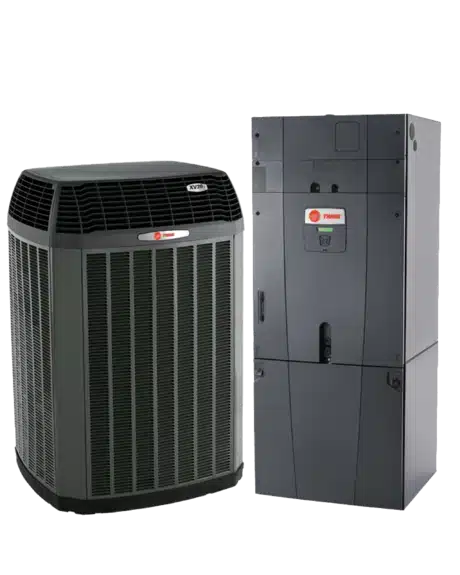
- Outdoor unit (heat pump): Houses the compressor, outdoor coil, and fan to exchange heat with outdoor air.
- Indoor air handler or furnace cabinet: Contains the blower and either an indoor coil (heat pump) or heat exchanger/heat strips (furnace/electric heat).
- Refrigerant circuit (heat pump): Moves heat between indoor and outdoor coils.
- Reversing valve (heat pump): Switches between heating and cooling modes.
- Burner and heat exchanger (gas furnace): Create and transfer heat safely to the air stream.
- Thermostat and controls: Coordinate staging or modulation, fan speeds, and mode changes.
- Ductwork and vents: Deliver conditioned air and return air to the system.
- Auxiliary/backup heat (heat pump): Electric heat strips or a paired gas furnace in a dual-fuel setup supplement capacity in colder weather.
Because selection, sizing, and setup impact both performance and bills, professional design and installation from ACS are essential—especially when comparing a standalone furnace/AC to an all-electric or dual-fuel heat pump solution.
Efficiency Metrics: HSPF2/COP vs AFUE
Comparing a heat pump to a furnace starts with understanding how each is rated.
Heat Pump Efficiency
Heating efficiency is expressed as HSPF2 (seasonal rating) and COP (instantaneous ratio of heat output to electric input). A COP of 3 means you get three units of heat for every unit of electricity—common in mild weather. As outdoor temperatures drop, COP declines and the system may rely on auxiliary heat. Cooling efficiency uses SEER2, which is relevant if the heat pump will also serve as your AC.
Cold-climate heat pumps are engineered to maintain higher capacity and efficiency at lower temperatures, and defrost controls help manage frost on the outdoor coil without excessive energy use.
Furnace Efficiency
Furnaces are rated by AFUE (Annual Fuel Utilization Efficiency). An AFUE of 95% means 95% of the fuel energy becomes usable heat, with 5% lost through venting and other factors. Modulating or two-stage furnaces can improve comfort and reduce cycling, but AFUE doesn’t reflect electricity used by blowers or accessories.
Bottom line: Heat pumps can deliver very high efficiency in moderate climates thanks to COP gains, while high-AFUE furnaces provide reliable output and hotter air when temperatures plunge.
Climate, Comfort, and Total Cost
Your weather, energy rates, and comfort goals determine which system wins for your home.
- Climate and balance point: In Northeast Georgia’s moderate winters, a heat pump often beats a furnace on operating cost. The balance point is where the heat pump’s output matches your home’s heat loss; below this temperature, auxiliary heat or dual fuel may help. In consistently colder regions, a gas furnace may be more economical.
- Operating cost examples: With electricity at typical kWh rates and natural gas at regional averages, many local homes see lower winter bills from a high-efficiency heat pump on 30–50°F days, while a 95% AFUE furnace can be cheaper during frequent subfreezing snaps. ACS can model your usage using local utility prices to project annual costs.
- Comfort and noise: Heat pumps deliver steady, even warmth with longer cycles and quieter outdoor units; furnaces provide hotter supply air and quick recovery, which some homeowners prefer on the coldest mornings.
- Air quality and humidity: Both systems use the same ductwork and filtration. Heat pumps tend to maintain slightly higher indoor humidity in winter compared to gas furnaces, which can dry the air more; pairing with proper humidification and filtration optimizes IAQ for either choice.
- Installation and compatibility: If you already have a central AC, replacing it with a heat pump can consolidate heating and cooling into one outdoor unit and an indoor coil/air handler. Homes served by gas lines and standard ducts can readily accept a high-efficiency furnace. Ductless heat pump options also exist for additions or homes without ducts.
- Environmental impact and incentives: Heat pumps run on electricity and can significantly cut carbon emissions, especially as the grid gets cleaner. Federal, state, and utility incentives may be available for qualifying heat pump and high-efficiency furnace installations. ACS helps identify rebates and handle paperwork.
The right answer isn’t one-size-fits-all. ACS evaluates load, insulation, duct condition, electrical capacity, fuel availability, comfort preferences, and total cost of ownership to recommend a heat pump, furnace, or a hybrid dual-fuel setup if that’s the best fit.
Auxiliary Heat, Dual Fuel, and When Each Makes Sense
Heat pumps often include auxiliary heat—typically electric heat strips—to assist during cold snaps, large thermostat setbacks, or defrost cycles. AUX heat ensures comfort but uses more electricity than standard heat pump operation, so minimizing big temperature swings can reduce runtime.
A dual-fuel configuration pairs a heat pump with a gas furnace. The heat pump handles efficient heating in mild-to-cool weather; when outdoor temperatures fall near the balance point, controls switch to the furnace for powerful, economical heat. This approach blends comfort, resilience, and cost savings across a wide temperature range.
“Emergency heat” is a manual thermostat setting that bypasses the outdoor heat pump and relies on backup heat only. It’s intended for system issues or severe conditions when advised by a technician. Not sure which strategy fits your home? Contact ACS for an assessment tailored to your climate, utility rates, and comfort goals.
Heat Pump vs Furnace: How They Work
Choosing between a heat pump and a furnace starts with understanding how each one creates heat. A heat pump moves heat using refrigerant and a compressor—extracting warmth from outdoor air and transferring it indoors. A furnace generates heat, typically by burning natural gas or using electric resistance elements, and then distributes that heat through ductwork.
Heat Pump Heating Basics
In heating mode, a heat pump reverses the refrigeration cycle. The outdoor unit absorbs heat even from cold air and the indoor coil releases that heat to your home. Thermostat settings, a clean air filter, and open vents are crucial to consistent performance. On the coldest days, some heat pumps rely on auxiliary heat or a dual fuel setup for peak comfort.
Key parts include a compressor, reversing valve, indoor and outdoor coils, expansion device, and fans. Modern cold-climate models are designed to deliver usable heat well below freezing, while standard systems are most efficient in milder winter conditions.
Furnace Heating Basics
A gas furnace burns fuel in a heat exchanger, and a blower moves warm air through supply ducts. Electric furnaces create heat via resistance heating elements. If your system struggles to keep up, common culprits include a dirty filter, closed registers, duct restrictions, or an incorrectly set thermostat. Professional assessment can confirm whether issues involve ignition, sensors, blowers, or venting.
Defrost and Cold Weather Considerations
Heat pumps periodically enter a defrost cycle to remove frost from the outdoor coil during winter. Light frost is normal, but heavy ice signals a performance concern. Furnaces do not require defrost but depend on proper venting and combustion air for safe operation.
Never force-heat a heavily iced heat pump or attempt to chip ice—it can cause damage. If winter performance is inconsistent, contact an HVAC professional to evaluate controls, airflow, and refrigerant levels, and to discuss options like dual fuel if your climate frequently dips below a heat pump’s ideal range.
Runtime and Cycling Differences
Heat pumps often run longer, lower-intensity cycles to maintain even temperatures, which many homeowners find comfortable. Furnaces typically cycle on and off with higher supply air temperatures. Short, frequent cycles from either system can indicate sizing, airflow, thermostat, or control issues that merit a professional review.
Airflow and Comfort
Both systems rely on strong, balanced airflow. A clogged filter, blocked registers, duct leakage, or a failing blower will reduce comfort. Heat pumps generally deliver gentler, steadier warmth; furnaces deliver hotter bursts of air. If one or more rooms feel underconditioned, have an HVAC technician assess duct design, static pressure, and coil cleanliness.
Operating Sounds
Heat pumps make fan and compressor sounds and a brief whoosh during defrost or mode changes. Furnaces produce blower noise and, in gas models, brief ignition sounds. Grinding, loud buzzing, banging, or persistent rattling from either system points to mechanical or electrical problems that should be checked promptly, especially if paired with weak heat, odd odors, or breaker trips.
Efficiency Metrics: HSPF2, COP, and AFUE
Comparing efficiency helps clarify lifetime costs. Heat pump heating efficiency is measured by HSPF2 (seasonal) and COP (instantaneous). A higher HSPF2 or COP means more heat delivered per unit of electricity. Furnaces use AFUE to show how much of the fuel becomes usable heat—95% AFUE means 95% of the gas energy warms your home, with the rest lost in exhaust.
Practical evaluation should consider:
- Local energy prices (kWh for electricity and therms/CCF for natural gas).
- Climate and expected outdoor temperatures.
- Duct condition and airflow that affect real-world performance.
- Modulation or variable speed capabilities that improve comfort and efficiency.
- Available incentives or tax credits that offset upfront cost.
- Integration options like dual fuel for very cold weather.
- Home insulation and air sealing that impact total load.
There isn’t a one-size-fits-all winner. In mild to moderate climates, a high-efficiency heat pump can cost less to run than gas. In areas with very low gas prices or extended deep freezes, a high-AFUE furnace or a dual fuel configuration may be the most economical and comfortable path.
Homeowners can help performance by replacing filters, keeping outdoor units clear, and ensuring vents are not blocked. Pay attention to runtime patterns and utility bills—changes can signal an efficiency drop worth investigating.
Climate, Balance Point, and Cost to Operate
The balance point is the outdoor temperature where a heat pump’s capacity matches your home’s heating load. Below this, efficiency and output fall, and supplemental heat may engage. Cold-climate heat pumps push this balance point lower, maintaining better efficiency in freezing conditions.
Operating costs vary by rates and weather. For example, where electricity is moderately priced and winters are milder, a high-HSPF2 heat pump can be the most cost-effective choice. In regions with inexpensive natural gas and long cold snaps, a 95–98% AFUE gas furnace may win on coldest-day costs, while a dual fuel system can switch between electric and gas to optimize savings and comfort throughout the season.
Proper sizing matters for either option. An oversized furnace can short cycle and overheat rooms. An undersized heat pump may run constantly and rely on backup heat too often. An ACS expert will evaluate load, layout, insulation, windows, and ducts to recommend the right fit.
ACS provides heating and air system installation and helps customers review system sizes and types that are effective and affordable for their homes or offices. The team emphasizes clear recommendations so customers can make informed decisions without pressure.
Comfort, Noise, Air Quality, and Incentives
Heat pumps typically deliver steadier, lower-temperature air for even comfort and quieter operation, especially with variable-speed compressors and fans. Furnaces deliver hotter supply air and rapid temperature recovery, which some homeowners prefer in very cold climates. For air quality and humidity, heat pumps avoid combustion byproducts and can pair well with advanced filtration and dehumidification; gas furnaces require proper venting and benefit from sealed combustion for safety.
Air Conditioning Services provides residential and commercial HVAC service throughout Gainesville and Northeast Georgia. ACS has generations of experience installing, maintaining, and repairing heating and air systems of all brands. The company offers flexible scheduling, employs highly trained and background-checked HVAC contractors, and backs its products and services with a 100% guarantee.
ACS serves customers across Hall, Habersham, Gwinnett, Jackson, Stephens, Dawson, Lumpkin, and Forsyth counties, including Gainesville, Flowery Branch, Oakwood, Clermont, Lula, Buford, Braselton, Dawsonville, Dahlonega, and Cumming.
For guidance on heat pump vs furnace selection, available rebates, and total cost of ownership, call Air Conditioning Services at 770-532-0731.
Heat Pump vs Furnace: Which Is Best for Your Home?
Both systems can deliver excellent comfort when matched to your climate, home, and budget. Heat pumps shine in mild-to-cool regions, offering high efficiency and all-electric operation. Furnaces excel in prolonged freezing conditions and homes with access to low-cost natural gas. Many homeowners consider dual fuel to blend the strengths of each.
Air Conditioning Services offers residential and commercial HVAC support across Northeast Georgia, including Gainesville, Flowery Branch, Oakwood, Clermont, Lula, Buford, Braselton, Dawsonville, Dahlonega, Cumming, and surrounding communities. ACS technicians are highly trained, background-checked, and experienced in installing, maintaining, and repairing heating and air systems of all brands.
Ready to compare options for comfort, efficiency, incentives, and long-term costs? Call Air Conditioning Services at 770-532-0731. ACS will evaluate your home’s load, ductwork, and energy rates, explain your choices clearly, and help you choose with confidence.
Open 7AM - 5PM Monday-Friday
Quick Contact Form
Make a Payment

Our Service Area
We have happy customers all around the Northeast Georgia area. We’ve provided HVAC services for homes and businesses in:
· Hall County: Clermont, Flowery Branch, Gainesville, Lula, & Oakwood
· Habersham County: Alto, Baldwin, Clarkesville, Cornelia, Demorest, Mount Airy & Tallulah Falls
· Gwinnett County: Dacula, Sugar Hill, Buford, Lawrenceville
· Jackson County: Pendergrass, Arcade, Braselton, Commerce, Hoschton, Jefferson, Maysville, Nicholson & Talmo
· Stephens County: Martin & Toccoa
· Dawson County: Dawsonville
· Lumpkin County: Dahlonega
· Forsyth County: Cumming
Contact us today when you need HVAC services you can trust.